
The MIT Study: AI Isn’t a Guaranteed Win
A recent MIT study, The GenAI Divide: State of AI in Business 2025, delivered a shakeup message: 95% of enterprise AI pilot programs deliver zero measurable return on investment.
Are we on the wrong path? Is the technology not ready? No.
The 5% of organizations that are succeeding are focusing AI on administrative and operational tasks, partnering with trusted third-party vendors, and empowering domain experts to drive adoption, rather than leaving to tech-only innovation labs.
Does this sound familiar in Healthcare? Think back to EMRs
This isn’t the first time a high-profile digital transformation journey started rocky and yet delivered life-saving upsides.
Electronic Medical Records (EMRs) gained traction in the 1990s and achieved widespread adoption in the 2010s, largely due to incentives from initiatives like the U.S. HITECH Act and meaningful-use criteria.
The path was not smooth. Early EMR implementations disrupted clinical workflows, slowed physicians, and created significant usability backlash. Some large hospitals faced systemic rejection, where clinicians stopped using the new system within months due to poor testing and lack of user involvement.
However, premier healthcare institutions focused on involving clinical teams in the design, offering intensive training with shadows and aligned EMRs with care protocols. This lead to successful rollouts and improved outcomes.
Parallels That Matter
Early EMR Challenges
- Disrupted clinical routines, overloaded with alerts
- Poor UX, added physician burden
- Resistance without clinician buy-in
- Immediate pain, long-term gains
- Training, co-design, workflow alignment
Current AI Pitfalls
- AI is not integrated into daily business tools
- Generic models that lack customization and context
- Low adoption of in-house AI; shadow tools spread
- Pilot-phase stagnation; delayed value
- Domain expert-driven rollouts, focused use cases
Healthcare’s EMR journey reminds us: transformations are difficult, complex, and require patience, but also pave the future.
We are in the early stages of enterprise AI, but the finish line is coming into view. AI tools which are integrated, adaptive, and human-centered will be the underpinnings of new ways of working.
AI & EMRs – Orchestrate and Augment
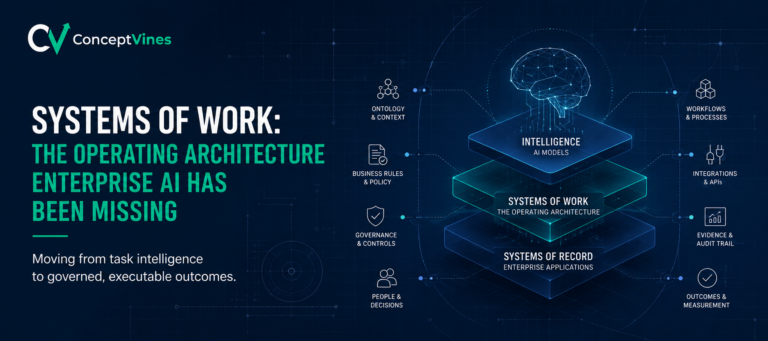
With AI, it’s not time to rip and replace your EMR. Instead, the opportunity lies in augmenting and enhancing existing EMR systems through AI orchestration.
Think of AI as the connection that can automate chart reviews, summarize patient histories, triage alerts, and integrate predictive models directly into EMR workflows. Just as EMRs became the foundation for care practice, AI will become the intelligence layer that supercharges existing digital infrastructure without forcing another costly, disruptive replacement cycle.
This approach not only reduces risk and accelerates ROI but also ensures clinicians experience AI as a helpful augmentation rather than yet another system to fight against.
Summary – Let’s learn from healthcare’s digital journey:
- Start small—solve one problem well
- Empower domain leaders to lead
- Design for workflow, train users, iterate
- Reframe ROI as long-term value
- Augment, don’t rip and replace and use AI to orchestrate and enhance existing systems