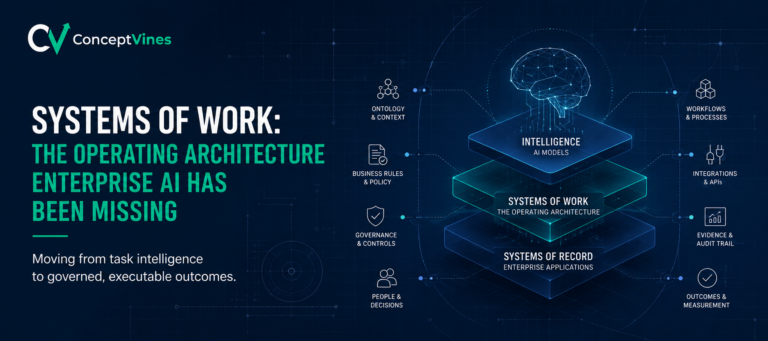

It’s time to stop replacing systems—and start orchestrating intelligence across them.
The Problem with “Rip-and-Replace” Thinking
Healthcare systems have spent hundreds of millions on EHRs, CRM, revenue cycle, and analytics platforms over the past decade. Yet the return on these investments has been slow and underwhelming—because these systems remain siloed, rigid, and unable to adapt to the growing complexity of care delivery.
No single vendor or platform can deliver seamless, end-to-end workflow optimization across clinical, operational, and compliance domains. Despite this, many organizations still default to rip-and-replace approaches—chasing consolidation instead of orchestration.
This results in:
- Years-long implementations
- Disrupted clinical workflows
- Large capital expenditures with unclear ROI
- Frustrated staff who still face inefficiencies
The Better Way: Modular, Interoperable Agentic AI
Instead of replacing systems, progressive health systems are embedding Agentic AI to activate their existing infrastructure. This approach is modular, fast, and scalable—unifying intelligence across the ecosystem.
Core Principles:
- Plugs into EHRs, CRMs, RCM, intake, and quality systems—no replacement required
- Orchestrates workflows like triage, documentation, prior auth, discharge, and billing
- Augments clinicians and ops teams with intelligent agents that automate routine tasks
- Enables measurable results in 60–90 days, with iterative expansion across departments
What Modular Agentic AI Solves That Siloed Systems Can’t
Here are examples of cross-system use cases where only modular AI agents can deliver real-time orchestration:
- Automated Discharge Planning – Combines EHR discharge criteria, care team notes, payer auth status, and follow-up scheduling.
- Whole-Person Patient Risk Scoring – Fuses clinical history, social determinants, and behavioral health data to trigger early interventions.
- Real-Time Prior Authorization Routing – Extracts diagnosis + treatment codes from EHR, maps to payer rules, and submits requests autonomously.
- Clinician Documentation Optimization – Understands provider intent and context to summarize visits, propose codes, and update records.
Rethinking the Investment Strategy
Siloed digital transformation is costly and slow:
- Average EHR overhaul costs: $100M–$1B+
- Time to ROI: 5–8 years
- Add-on modules require costly customization, retraining, and integration
Modular Agentic AI flips the equation:
- Fast ROI in < 90 days with use-case pilots
- Incremental expansion aligned to department goals
- Minimal disruption—staff use existing interfaces and systems
This isn’t just better tech. It’s better strategy.
Bottom Line: AI-Orchestration Over System Replacement
The next generation of transformation is not about buying new monolithic systems—it’s about activating the intelligence in your current systems.
Modular Agentic AI enables health systems to:
- Move faster
- Scale smarter
- Adapt quicker to staffing shortages, reimbursement changes, and regulatory shifts